
So Close and So Wonderfully Wrong
Round-up on the reality of the love of God; Catholic childbirth influencers; and a pretty good mental health observation from a secular POV.
What, really, are we?
The other week I was listening to a Huberman Labs podcast on mental health, which I can’t exactly recommend, as you’ll see, but that brought to my attention a serious theological fact.
The podcast is here, “Unlearn Negative Thoughts and Behavior Patterns” with Dr. Alok Kanojia. If you click the “Timestamps” tab under the video, you’ll see that very obviously this conversation is not coming to the question from a Christian point of view. Not a shocker, other religions exist.
What I want to talk about that is so valuable for us — everyone — to understand, is a moment starting at 1:13:46 “Tool: Shunya ‘Void’ Meditation & Resilience.” You can click on the timestamp (in boldface on the podcast page) to go right to that section if you are so inclined.
In the exercise described at that point in the show, the concept as I understand it is to let go of all your identities you lean on for self-esteem purposes, and which therefore can fuel anxiety about not being good enough, and find this “void” that is you before all the things of this life. Dr. Kanojia specifically mentions the moment of conception (creation, coming into existence) as a time when you were “nothing” and in the described breathing exercise you focus on that.
But here is the thing: When you completely strip away all your identities and history and accomplishments and sins and whatever other mental junk you are (rightly) trying to let go of in such a meditation, you don’t end up at nothing.
What you find, rather, whether you know it or not, whether you perceive it or not, is the love of God.
That is what is there.
That is what is sustaining your existence from breath to breath. That is the cause of your existence, and it is what you were created for. The love of God.
Quite different from nothing.
You try to find that moment when you were nothing at all, and instead you find that what you are, at the very essence of your being, when every externality is stripped away, is someone completely and totally loved by God.
Anyway, I have no idea what the exercise does to one if you truly believe there’s a nothing to be had (there isn’t). Maybe it doesn’t throw people into existential despair because they aren’t, actually, hitting a void. Because the rumored void is not there to be hit.
I can say that setting aside the distractions of the world and focusing entirely on the complete and all-sustaining, unmerited, ever-merciful love of God? Great for your mental health.
Uncomfortable Bodies
A few of you have noticed I’ve been goofing off on the Substack Notes app, where I don’t write about evangelization and discipleship — that happens here at One Soul at a Time, so don’t feel you need to head that way to see what I’ve been writing. Haven’t been. I chose Substack’s newsletter format specifically for readers who are trying to stay off social media.
Rather, I’ve been using the Notes app as a magazine, reading widely per the algorithm’s pretty-good tendency to serve up intellectual crack. (I’m an easy mark.)
But, relevant for us evangelists, is this article that popped up in my feed about Catholic birth influencers moralizing medical decisions: “Is Birth Supposed to Be Painful?” by Sabrina Maeve at Be Not Afraid.
The author notes, concerning anesthesia during childbirth:
Yes, pain in childbirth is described as a consequence of the Fall, but Catholic theology does not interpret this to mean that women ought to seek out or preserve that pain as somehow spiritually preferable. The Fall describes a broken condition, not a prescription for how things should remain.
Second, there’s a significant moral leap happening here: the idea that avoiding pain is often the wrong choice, especially in this context. Catholic teaching does not glorify pain for its own sake. Suffering can be redemptive when it is accepted in union with Christ—but that’s very different from saying we should choose unnecessary suffering when legitimate means exist to alleviate it. The tradition has long affirmed the moral legitimacy of medicine, including pain relief. In fact, Pope Pius XII explicitly addressed this, stating that the use of anesthesia in childbirth is morally permissible.
I want to highlight this (correct) response to the false idea that unmedicated childbirth is the spiritually superior choice. As evangelists it is extremely important that we not make claims which the Church does not, and do not weigh people down with prescriptions the Church does not impose.
In the combox on that blog I added a few thoughts, as someone who does in fact prefer unmedicated childbirth (when possible) for prudential reasons. I think the error Sabrina Maeve is correcting comes from a real experience. Quoting myself:
I think some confusion comes in this discussion because what we experience while giving birth, or any other intense life experience, changes us. There are things I gained from the experience of giving birth unmedicated that have stayed with me and been very valuable. But this is also true of moms who give birth other ways! Moms who have positive epidural experiences often cite very real blessings that flowed through that approach. They aren’t making that up, it’s a thing.
So we mix up “I had these xyz tremendous moments of growth that tie directly to my experience, and are worth considering,” with “therefore everyone should approach it as I did.” Just not the case.
Again, in sharing this I am not at all interested in turning One Soul at a Time into a discussion of childbirth choices (you can go over to Be Not Afraid for that), but to reiterate: Don’t confuse prudential judgements and personal positive experiences, however serious or profound, with universal moral laws.
It is hard enough trying to live a virtuous life as it is. What you’ve lived through is very valuable, something to be cherished always and shared when it’s helpful to do so, but we still need to place that experience within its proper frame.
Living with Mental Discomfort
Finally, another mostly off-topic Sub, Steve Magness is someone I’m familiar with from mostly-agreeing with him on Twitter when he rants about youth sports culture. But, related to our newsletter last month on mental health topics, he’s got a good piece up on not just OCD and intrusive thoughts, but self-sabotaging thoughts and actions generally, “Not Every Feeling is an Emergency”:
Think about the way technology has helped us deal with our internal feelings. Consider:
Boredom standing in line? Check the phone.
Loneliness? Open social media to see our “friends” or chat with an AI bot.
Uncertainty about whether our workout was good enough? Open the watch.
“Did I lock the door”? Pull up the camera feed.
Discomfort of silence on a walk? Put on the podcast.
Anxious about something? Scroll on an app to distract yourself.
Each of these addresses the underlying feeling by acting on the world.
I would add that in addition to mental health generally, cultivating the ability to live with an uncomfortable thought or feeling is part of the process of overcoming habitual sin. Message I needed.

How’s it Going, Jen?
I think I’m back on track? Mostly down for the count for about six weeks there after picking up a mild cough-type thing, but as of last week I’m back to the gym so I think the corner has been turned.
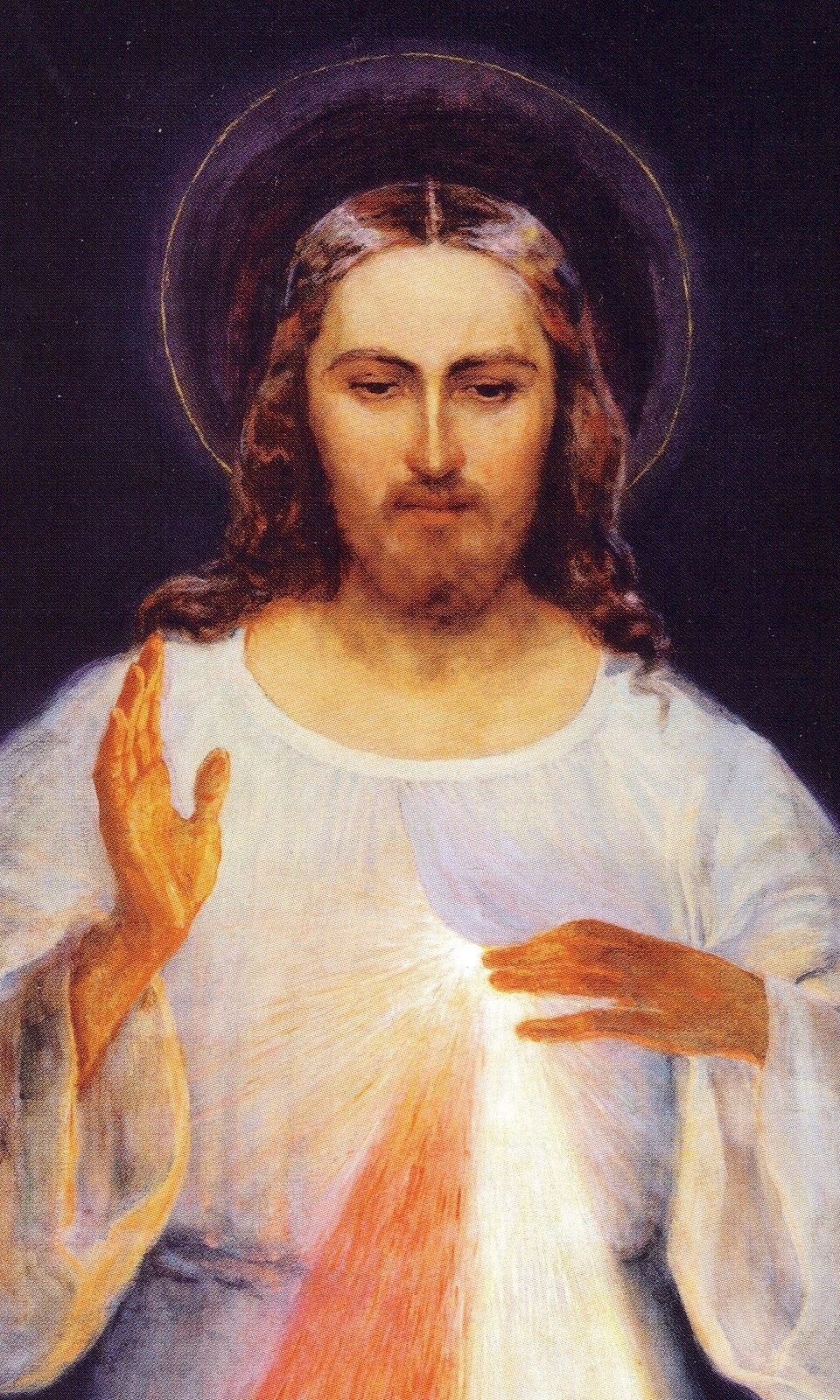
Very sad, though, to have missed Mass on Divine Mercy Sunday (laid out hard, it happens), which is one of my favorite observances. Someone very well-read once questioned me about that devotion, and my only answer was: But I need it.
That remains my answer.
Want to give a huge thanks to the handful of sponsors who are keeping my work here, however Little Way it often becomes, financially afloat. My expenses for writing stuff are minimal, and a quick tally when doing the taxes confirmed that once again those few bills were covered. Thank you so much for your generosity in keeping this newsletter free for everyone to read.
Prayer request: Please pray for reader and contributor Cathy Lins, we were slated to work on getting her substack up and running last week, but she was sidelined by some medical stuff.
Reminder that while combox access is (usually) a perk for sponsors, all subscribers can send prayer requests my way at any time by replying to the e-mail version of this newsletter in your e-mail inbox. DM’s on Notes are also open for now, and of course if you know me in regular life, flag me down there.